
To make a character jump in Scratch, you need to code the upward movement using a 'repeat' block that increases the y position by 10 for 15 iterations, and then code gravity using a 'repeat until' block that decreases the y position by 10 until the character touches the ground color. This creates the illusion of jumping and falling.
To make a character jump in Scratch when playing, you typically use the 'up arrow' key to trigger the script that increases the Y position for upward movement and decreases it to simulate gravity.
Follow along for more details, tips, and troubleshooting.
---
Creating a platformer game in Scratch is a fun and engaging way to learn coding. Within that, jumping is a key mechanic in such games, allowing characters to move from platform to platform. According to MIT Media Lab (Scratch's creator), over 100 million projects have been created on Scratch, with platformer games among the most popular project types for teaching fundamental programming concepts.
Here are a few key terms to know before getting started, followed by a step-by-step guide to making your Scratch sprite jump.
- Sprite: A character or object in Scratch that can be programmed to move and interact.
- Costume: Different appearances of the same sprite (e.g., facing left vs. right).
- Y Position: The vertical location of a sprite (higher y = higher on screen).
- X Position: The horizontal location of a sprite (higher x = further right).
- Color Detection: A Scratch feature that detects when a sprite touches a specific color, used here to detect ground/platform contact.
1. Set Up Your Game Environment
Create the Ground and Platforms
- Draw a Ground sprite for your character to stand on.
- Add Platform sprites for your character to jump onto.
TIP: Make sure the top color of the platforms matches the color of the ground exactly. If you look at the example below, both the ground and the platform tops are light purple.
Position and Resize Sprites
- Arrange your ground, platforms, and character sprite in the game preview window to build your basic game layout.

Step 2: Prepare the Character Sprite
Add Costumes for Directional Movement
Your sprite should have at least two costumes: Right and Left. This will allow the character to turn when the arrow keys are pressed.
- Draw the character facing the right side of the screen.
- Right-click the costume and select Duplicate.
- Highlight the entire character, then click Flip Horizontal to create the left-facing version.
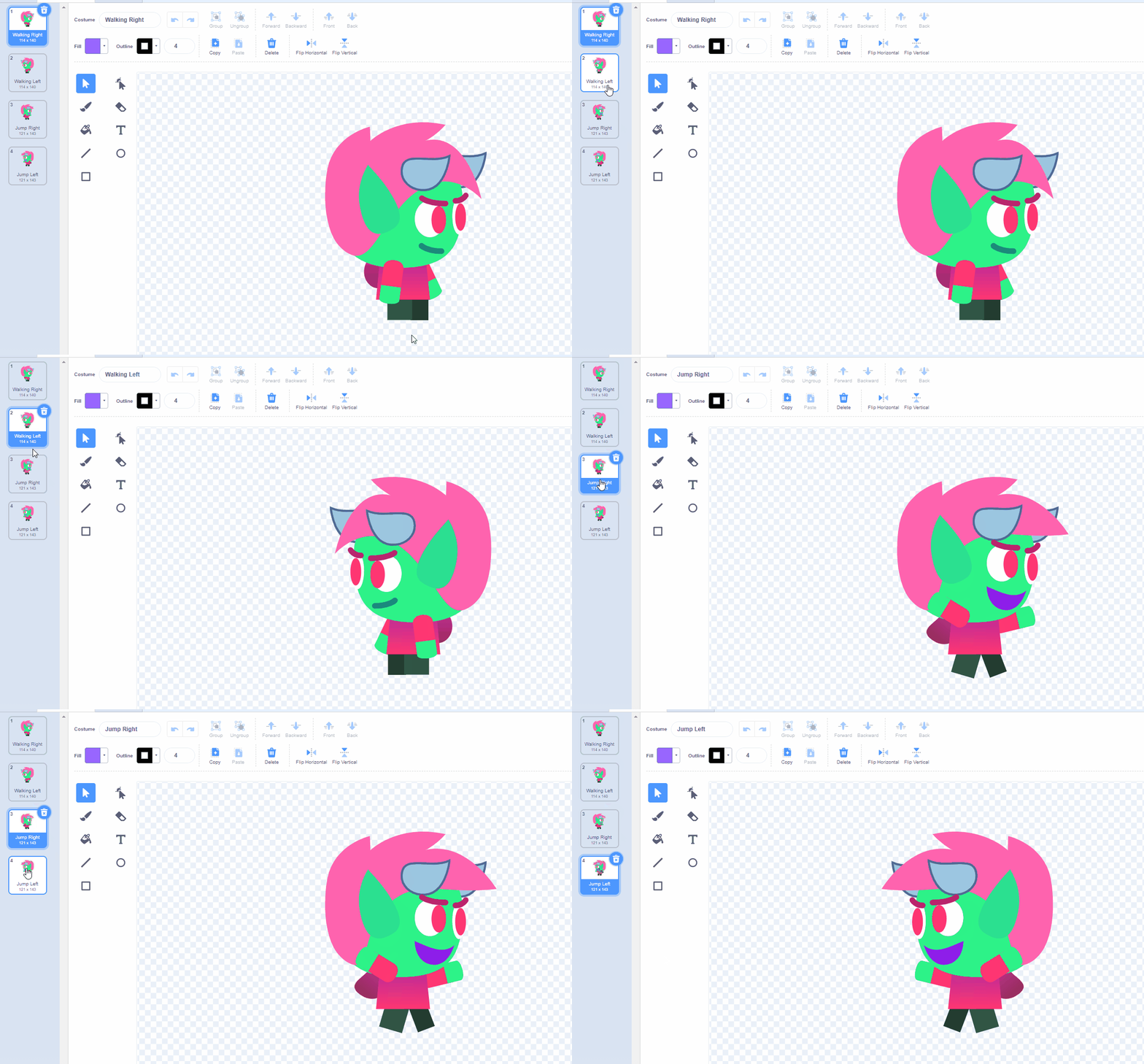
Step 3: Code Character Movement
Moving Right and Left
Select the character sprite and add the following code:
1. Select the player character sprite and add "when right arrow key pressed" to the code area.
2. Attach a "switch costume to Right" and "change x" block with a value of "20."
3. Right-click and "Duplicate" the code block, and change the key to left arrow.
4. Change the costume to "Left" and the "x" value to "-20."
Tip: The if on edge, bounce block is a helpful tool if you want your character to automatically turn around when they hit the sides of the game window.
| Direction | Key | Costume | X Change |
|---|---|---|---|
| Right | Right Arrow | Right | +20 |
| Left | Left Arrow | Left | -20 |

Step 4: Code the Jumping Mechanic
Jumping Up
In Scratch, jumping up is achieved by changing the character's y position.
First, add a "when up arrow key pressed" to the code area. Then, attach a "repeat" block set to "15," and place "change y" by "10" inside of it.
Falling Back Down
When jumping in real life, gravity naturally brings you back to the ground. In Scratch, you'll need to code this manually.
- Attach a "repeat until <>" block under the previous repeat block.
- Click the "color" variable" and then select the eyedropper tool from the "color" menu.
- Hover over the "Ground" color and then click to select it.
- Inside the "repeat until" block, add "change y" by "-10."

TIP: If there's a platform directly above your character, you might get stuck on the first jump. This happens because the top of your character is technically touching the ground color, and so it thinks it doesn't need to fall! Here is a fix:
In the "repeat 15" block, attach an "if <> then" block under the "change y" block. Then, add the color to the "if" brackets and select the bottom color of the platform and inside the "if" block, add "change y" by "-10."
Next Steps
And with all of that, your child should be well on their way to completing their Scratch creation—jumping and all! For more advanced movement, you can create a Velocity variable to simulate gravity. This allows the sprite to speed up or slow down gradually, making the jump feel more natural than using fixed numbers.
For additional Scratch tutorials and official documentation, visit the Scratch Wiki, and for more advanced jumping mechanics like variable jump height, see the Scratch community tutorials on platformer physics.
If your child is looking to take the next step in guided instruction, check out our many summer camps in Scratch, Scratch coding classes, or Online Private Lessons.


